Italy · Tuscany · Val d’Orcia · Montalcino
Castello di Velona in Winter: Which Week to Book, and Why 8 January Matters
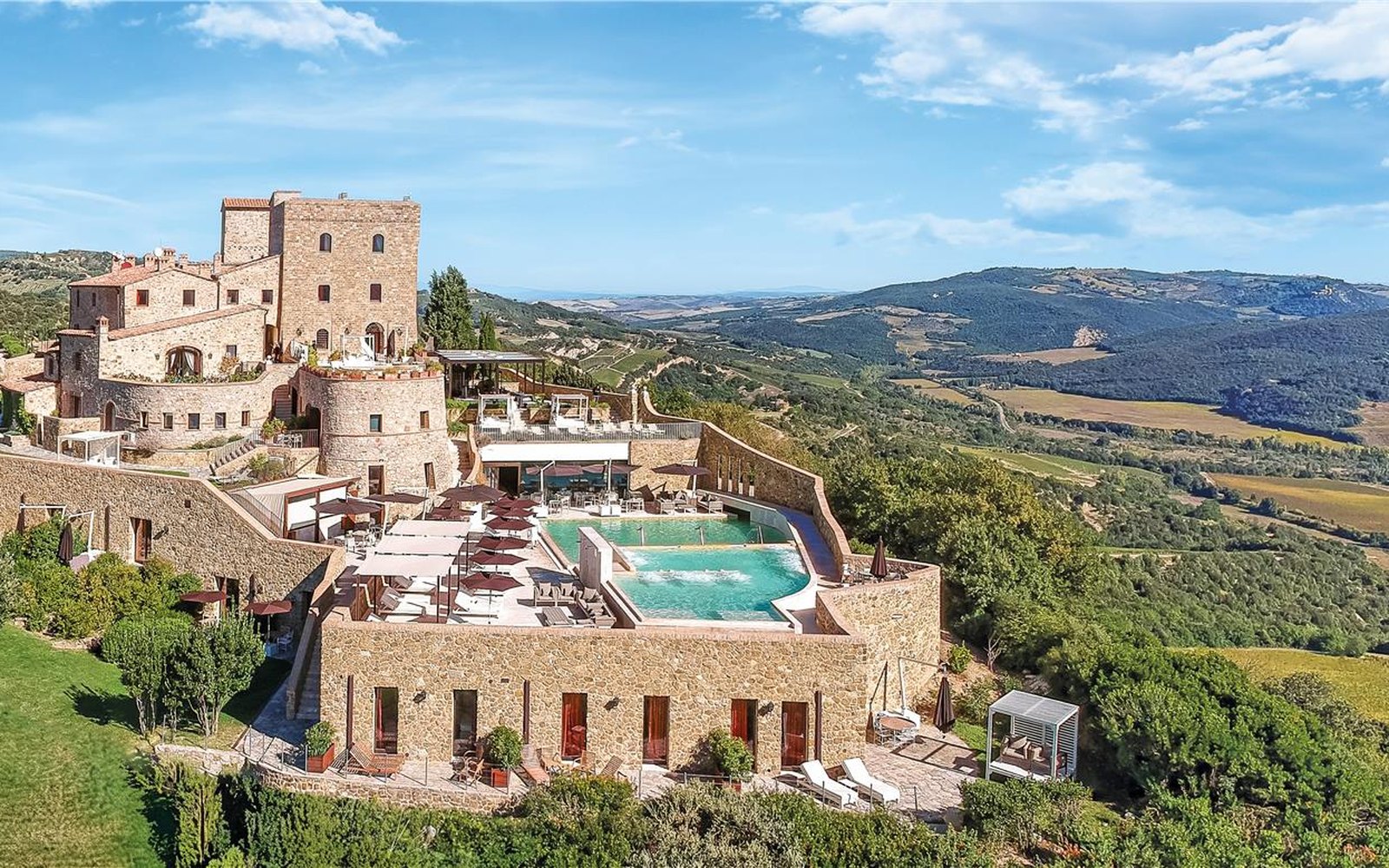
In winter the Val d’Orcia fills with fog that does not lift until mid-morning, the vines are cut back to bare wood, and a castle on the ridge above it all has warm water coming out of the ground at 36°C. That is the trip. The catch is that, on the dates I checked, winter availability is short.
Live inventory makes the limit obvious. A 7–10 January stay still prices. Shift it one day, to 8–11 January, and nothing returns at all. Spot checks for arrivals on 9, 12 and 20 January, 10 February and 10 and 24 March returned nothing either, while a 26 March arrival priced again. That is a handful of sampled dates, not an announcement; arrivals up to 7 January are the ones I saw price.
I could not find published closing and reopening dates for this season, so treat those as observed availability rather than an announcement. It is also the first thing I would get in writing for anyone booking the January end of the window.
Why winter is the point, not the compromise
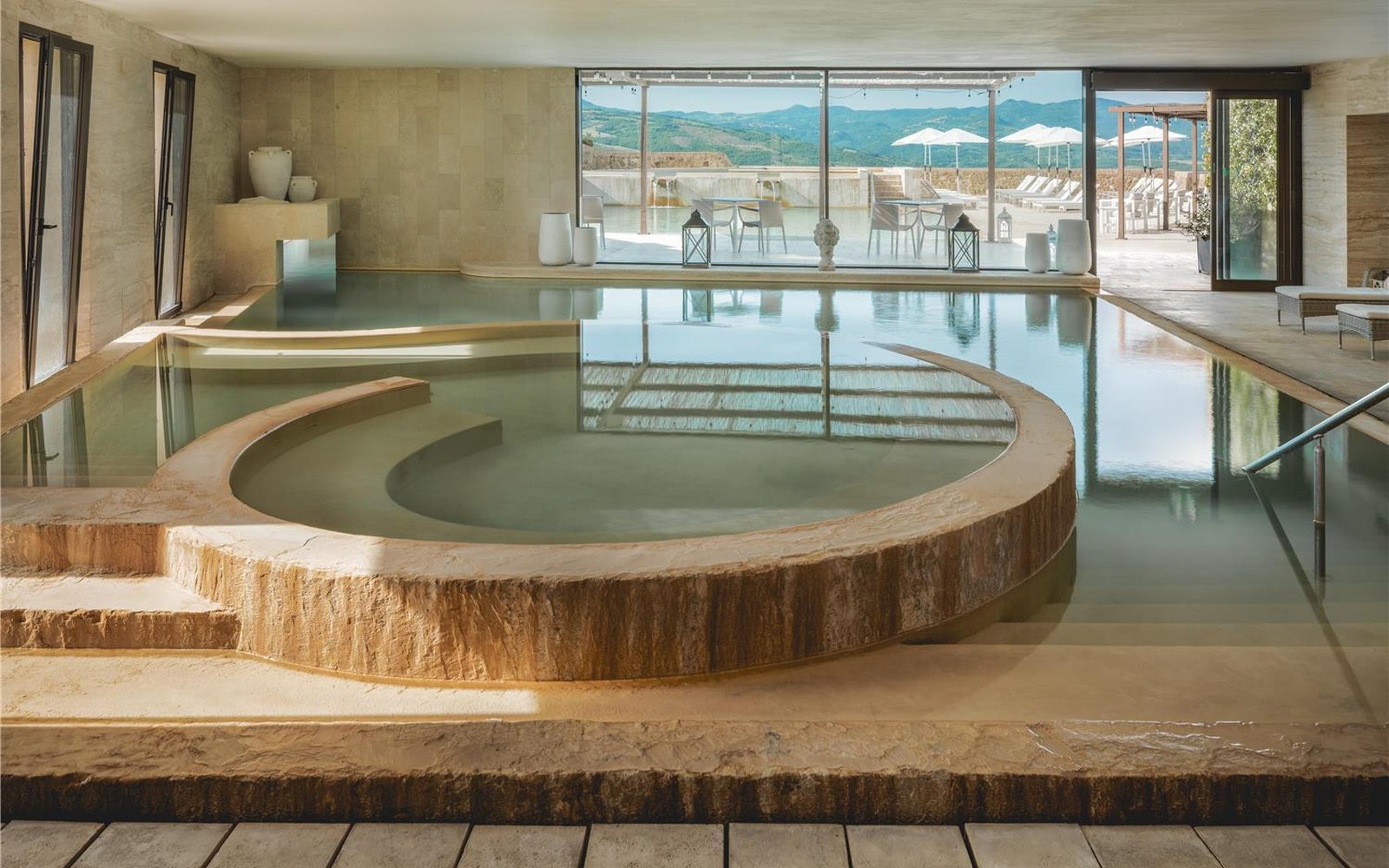
Underneath the castle is a spring of volcanic origin, heated deep underground by nearby Monte Amiata and carrying calcium, magnesium and zinc up with it. It surfaces on its own at 36°C. The hotel’s own line about it is the honest one: this is not heated water, it is the land of Tuscany warming you.
The detail that actually decides whether winter works is the plumbing. OLISPA’s four pools are connected, indoors to outdoors, so you get in inside and swim out without ever leaving the warm water. That single design choice is the difference between a thermal castle in January and a cold dash across a terrace in a robe. The pools run 24 hours, which is why the hotel says the night swim under the stars is the thing guests most often take home with them.
Note the two clocks, because they are not the same. The pools are always open; the treatment side of OLISPA runs 11:00 to 20:00. Book massages against the second clock.
The rest of the 1,500-square-metre spa is built from Tuscan travertine: a panoramic sauna facing the valley, two steam rooms, sensory showers, an ice cascade, a saline pool. Couples get a double treatment cabin.
A fortress that a spring turned into something else
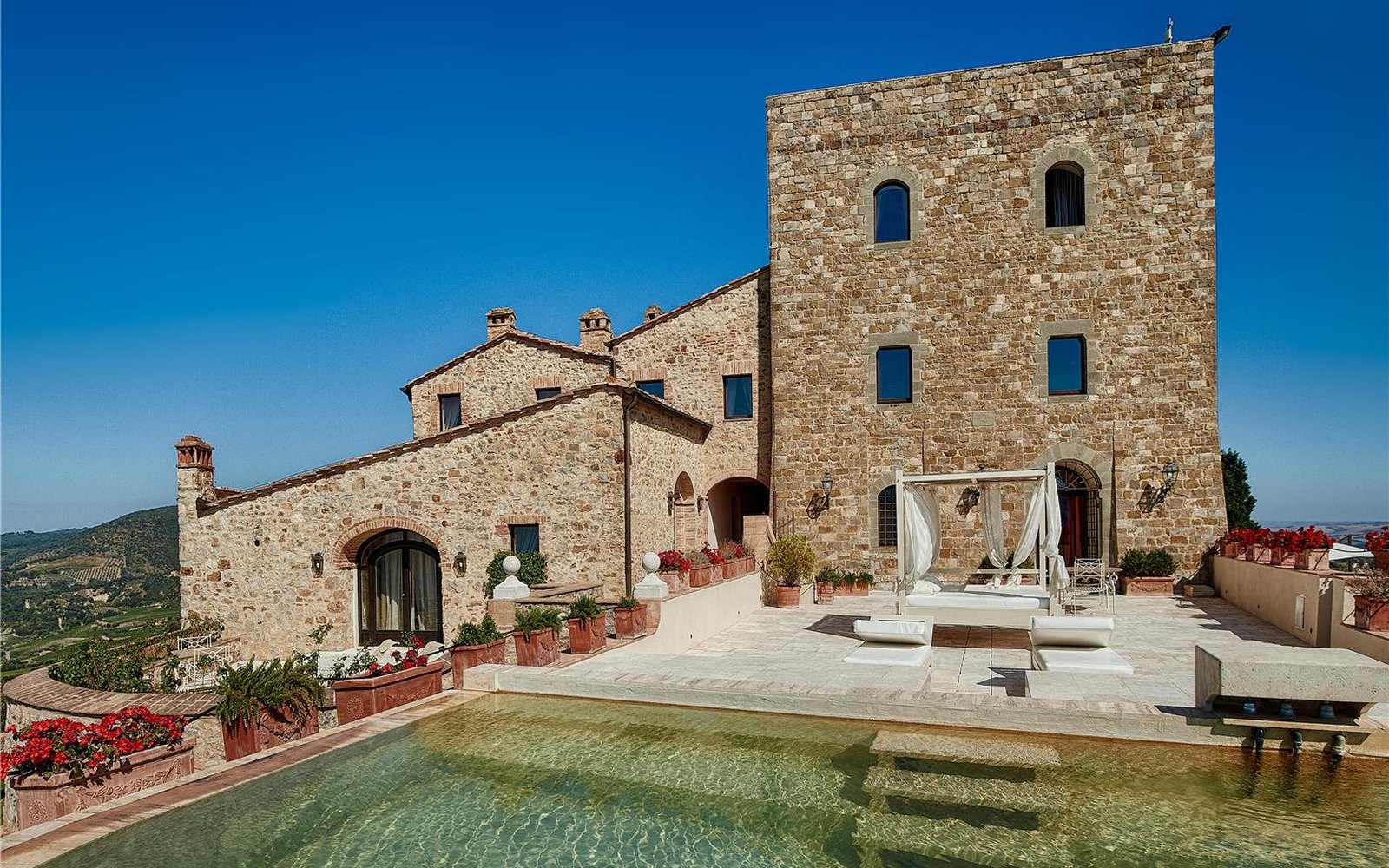
The castle is a thousand years old, built as a military stronghold in the 11th and 12th centuries above the old Roman Via Clodia. Its origin is unusual. It was never one lord’s fief but a Consortium of Arts and Crafts, run by the master artisans living inside the walls. It was expanded in the 12th century, as the Aldobrandeschi counts rose in the Val d’Orcia, and the watchtower survives from that era. The Medici held it in the 15th century, and the main loggia dates from the Renaissance. Count Martelli’s insignia is still readable on the central tower.
It only soldiered for three or four hundred years of that; by the 15th century the Medici had turned it into a residence. Then a century of silence, until the Piermartini family restored it from ruin in 1997. The spring was found among the vines. What finally changed what the building was for was the water.
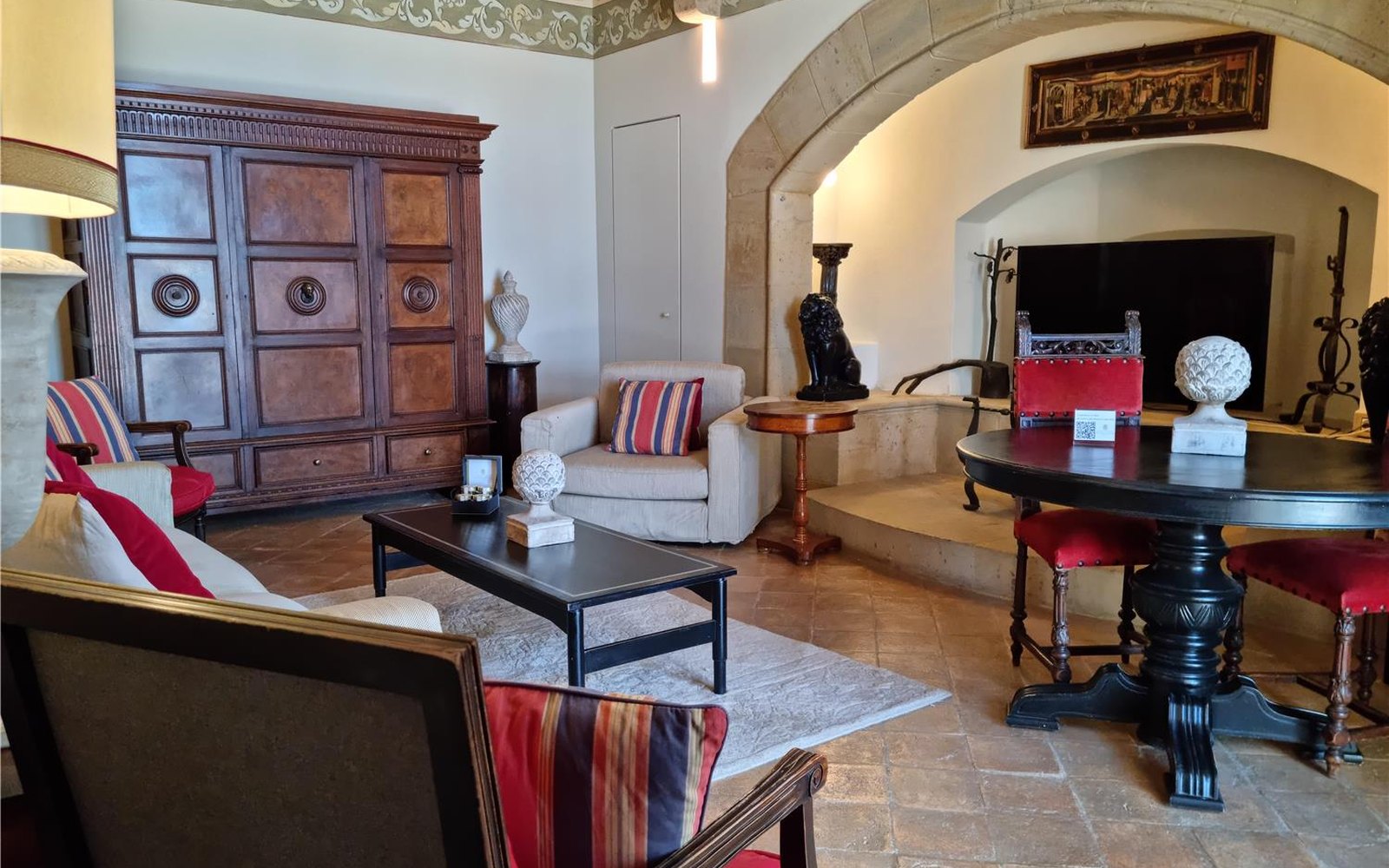
Rooms split two ways. Castle rooms sit in the old building with the original windows and wide spaces, and some have fireplaces, which matters in December. Contemporary rooms all come with a private garden or terrace and a tub plumbed with thermal water; that category is named UNESCO, after the Val d’Orcia outside the window, inscribed in 2004. The whole castle holds just nine rooms and thirty-six suites. Pricing throughout uses the entry Junior Suite, 43 to 58 square metres with its own sitting room, big enough that I would secure dates first and argue about room category second rather than betting the trip on an upgrade.
Four windows, priced the same way
Here is the part worth doing arithmetic on. Same room type, same three nights, two adults, one room, taxes in, all compared on the refundable and non-prepaid tier so the numbers mean the same thing. Quoted live on 15 October 2026, in euro.
7 January comes in at €1,453.50 for the three nights. Christmas, arriving 23 December, is €1,589.50. Mid-November is €1,657.50. New Year, arriving 30 December, is €2,698.75.
Two things fall out of that. Christmas is €68.00 cheaper than the mid-November window, also one total subtracted from another, which inverts what most travellers assume about holiday pricing. If you want the festive version of this place, Christmas costs less than mid-November.
New Year costs €1,245.25 more than early January for the identical three nights, about 1.86 times the price. That figure is one quoted total subtracted from another, arithmetic rather than a quote. Whether it is worth it depends on whether you came for the midnight or for the water. If it is the water, moving one week later saves €1,245.25 on the three nights.
On that January window the Virtuoso tier prices at €1,453.50 against €1,539.00 for the cheapest comparable public rate, a gap of €85.50, again one quoted total subtracted from another. That gap is not a discount anyone negotiated, and it is worth knowing where it comes from.
Put the same flexible breakfast-and-spa rate side by side, and the Virtuoso and public prices match to the cent in all four windows. There is no secret rate on the same product. The tier lands lower because it also carries a three-night-minimum product. The difference that holds every time is the layer on top: breakfast, full use of the spa and thermal pools, an upgrade on arrival, a welcome amenity, early check-in or late check-out, and a 100 USD (roughly 85 EUR) property credit. Upgrades and early or late timing depend on how full the hotel is that day and are not guaranteed. The credit cannot go against the room rate and is not refunded if unused.
Before you book
The best use of that credit is the Brunello Ritual, which the hotel builds around Montalcino’s own wine as a face and body treatment, or the LAJATICA signature treatment created with Andrea Bocelli from Tuscan wine and herb aromatics. The Virtuoso tier carries a three-night minimum, cancels free up to five days before arrival and takes no prepayment. Montalcino city tax is charged separately and is not inside any figure above. Breakfast is included, 7:30 to 10:30, at Settimo Senso.
This is not an adults-only property. The hotel welcomes children of all ages and stocks cribs, so if a guaranteed quiet adult trip is the requirement, do not assume the building will be empty of families over the holidays.
The spreads above come from which rate tier and which week you book, not from a promotional code.
Who should go, and who should not
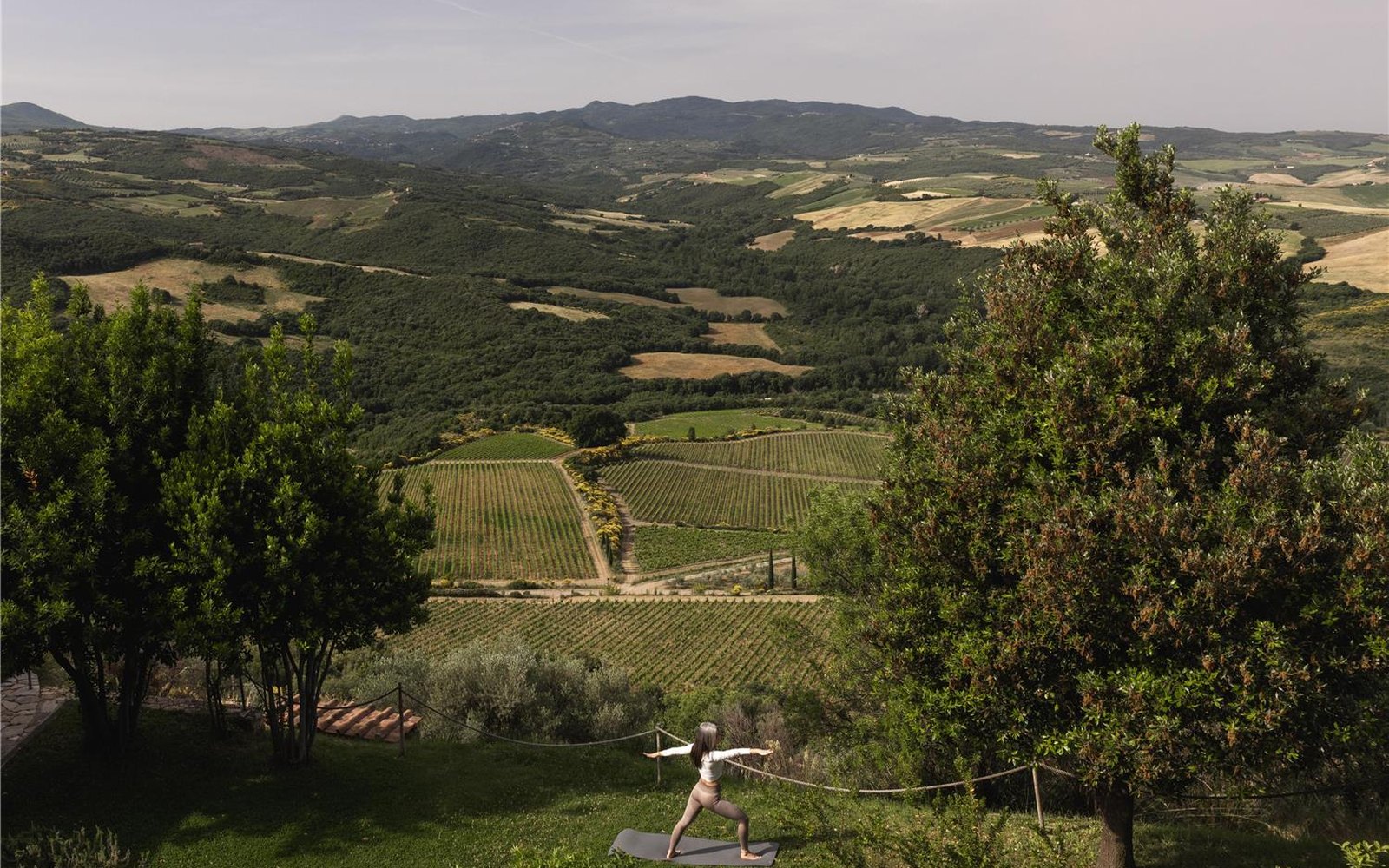
Two groups should. Couples who want fog, quiet and a thermal pool that stays open all night, and who are not trying to see Tuscany in four days. And anyone whose actual holiday is the water: three nights minimum, with getting in, getting out and getting back in as the plan.
Three groups should not. Sightseers, because this works as a base rather than a launchpad. Anyone bringing small children while also expecting adult calm, for the reason above. And anyone whose leave falls between mid-January and late March: the sampled arrivals on 20 January, 10 February and 10 and 24 March did not price, so check your exact dates first.
On the human layer: you can verify every rate above yourself, and you should. What I add is the rest of it. Asking the reservations office whether the gap after 7 January is a closure or unreleased inventory, and getting the answer in writing, rather than inferring it from a search screen. Lodging the upgrade and early check-in with the front office before you travel instead of raising it at the desk. With 45 keys and a Christmas week, nobody can conjure a room, so I will not call an upgrade certain; what I can promise is that someone asked early and on the record. And settling that credit with the spa against a named treatment or tasting before you go, instead of discovering on checkout day that it expired unspent. None of that appears in a rate. None of it is guaranteed, but someone has to ask early.
Want the four windows priced side by side, or whether it is open after 7 January confirmed first?
Check the article’s dates (2027-01-07 – 2027-01-10)Check my own datesStay rates are checked again. Event places, dining and other services require a separate enquiry unless explicitly included.
Rates are live rate pulls from the booking system, taken on 15 October 2026 on a single common basis: the same property, the same Junior Suite room type, three nights, two adults, one room, taxes included, quoted in euro, with every one of the four windows compared on the refundable and non-prepaid tier so the figures are directly comparable. The €85.50, €68.00 and €1,245.25 gaps and the 1.86 figure are one quoted total subtracted from or divided by another, arithmetic rather than a quote the hotel issued separately. Montalcino city tax is charged separately and is not included in any figure above. The advisor tier carries a three-night minimum, cancels free up to five days before arrival and takes no prepayment; on the identical flexible breakfast-and-spa product the advisor and public prices are the same number, with amenities separate, and upgrade on arrival and early check-in or late check-out are subject to availability rather than guaranteed. The 100 USD (roughly 85 EUR) property credit cannot be applied to the room rate and is not refunded if unused. Availability statements come from spot checks on the day of search: a 7 January arrival priced; arrivals on 8, 9, 12 and 20 January, 10 February and 10 and 24 March returned nothing; a 26 March arrival priced. These are sampled dates, not an announcement, and no published closing or reopening dates were found. Castle history, the 36°C spring and OLISPA facilities come from the property’s own material; destination and seasonal details were checked against public sources. The author has not stayed here; the judgements are based on that material and on this rate search. Photography courtesy of the hotel.
Jay Yan · FlyBest
Directory: Castello di Velona · Montalcino · Italy
Questions travellers ask
What does the Virtuoso rate at Castello di Velona include?
The Virtuoso rate at Castello di Velona includes breakfast, full use of the spa and thermal pools, a welcome amenity, and a property credit that cannot be applied to the room rate or refunded if unused. An upgrade on arrival and early check-in or late check-out are subject to availability and are not guaranteed.
Which Castello di Velona room should I choose for a winter stay?
Choose a castle room for the old building, original windows and wide spaces, noting that only some have fireplaces. Choose a UNESCO room for a private garden or terrace and a tub supplied with thermal water. Secure the dates before relying on an upgrade.
Are the thermal pools at Castello di Velona open all night in winter?
Castello di Velona’s four connected indoor and outdoor thermal pools run 24 hours. OLISPA treatments operate from 11:00 to 20:00, so massages need to be booked within those hours.
How does the flexible Virtuoso rate at Castello di Velona work?
At Castello di Velona, the Virtuoso tier has a three-night minimum, requires no prepayment and can be cancelled free up to five days before arrival. On the same flexible breakfast-and-spa product, the Virtuoso and public prices match, with the Virtuoso benefits added separately.
What should I check before booking Castello di Velona after 7 January 2027?
In availability checked on 15 October 2026, a 7 January arrival priced, while sampled arrivals on 8, 9, 12 and 20 January returned nothing. This was not an official closing announcement, so ask whether the gap reflects a closure or unreleased inventory and get the answer in writing before booking.